Eating With Partial Dentures and What to Avoid
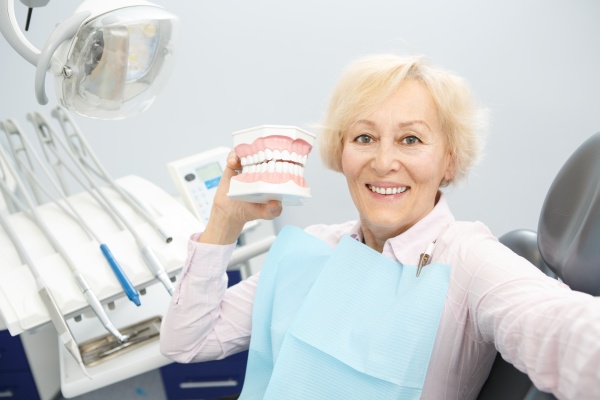
Partial dentures are used to replace missing teeth when you still have most of your natural teeth. Even though the dentures help restore your smile, they can take time to get used to, especially when it comes to eating.
Eating with partial dentures and what to avoid
Exercise patience
Eating with partial dentures is not the same as eating with your natural teeth, which means there will be an adjustment period before you are comfortable. Even though it might be frustrating at first, you have to exercise patience.
Chewing with your natural teeth is easier because the nerves in your teeth transmit signals to your brain, telling it how hard or soft to chew the food in your mouth. If you have partial dentures, the artificial teeth do not have a connection to your brain, which will make chewing difficult at first.
Start out with soft foods like eggs, vegetables, fish and cereal before moving up to meats and harder foods. You should also make sure you cut your food into small bite-size pieces to make chewing easier.
Avoid using your front teeth
If your partial dentures are in the front of your mouth, biting down on food will be difficult and can damage your dentures. Instead of biting down on something like an apple with your front teeth, you should cut it into smaller pieces with a knife, making it easier to chew the food while limiting any damage to your dentures.
Stay away from certain foods
When you have partial dentures, there are specific foods you should avoid to prevent damage to your dentures. These include:
- Peanuts/peanut butter: Like all sticky foods, peanut butter should be avoided at all costs because of the damage it does to dentures
- Steak: If you are a meat lover, this will be a tough one to give up, but it is one of the sacrifices you have to make if you have dentures, because chewing tough meats can put a great deal of pressure on your dentures and the gums underneath, leaving you in pain
- Hard candy: Biting down on hard candy can cause serious damage to your dentures, costing you money in the process; this does not mean you cannot enjoy candy, it just means that if you must have hard candy, you need to suck on it instead of biting down on it with your dentures
- Popcorn: Popcorn kernels get lodged in your teeth, are a hassle to get out and can cause damage to your partial dentures, especially if you accidentally bite an unpopped kernel
Brush your dentures regularly
Having dentures does not mean you stop practicing good oral hygiene. Make sure to brush and clean your partial dentures regularly to avoid the inflammation of your gums and the decay of your remaining natural teeth.
Conclusion
Eating with partial dentures will take a little getting used to, but if you follow the steps provided, you should be able to enjoy most of the food you used to eat before you got the dentures. Ask your dentist for tips on how to eat without damaging your dentures.
Request an appointment here: https://muhlenbergdental.com or call Muhlenberg Dental Associates at (610) 844-9825 for an appointment in our Reading office.
Check out what others are saying about our services on Yelp: Read our Yelp reviews.
Recent Posts
A dental cleaning is the perfect opportunity to catch up with your dentist. Yes really, catch up. Your average dentist loves it when their patients have healthy teeth that need little more than a light scrub. This is why preventative measures like routine checkups are so important.Patients with healthy teeth can spend the bulk of…
An emergency dentist can provide urgent care when an accident causes a tooth to loosen, shift, or come completely out of its socket. A dislodged tooth needs prompt attention because prompt treatment may improve the chance of saving the natural tooth and limit the impact on the gums, jawbone, nearby teeth, and nerves. Our dentist,…
A tooth extraction helps protect oral health, but complications can happen. If severe pain starts a few days after the procedure, a dry socket is typically the primary cause. You need to know what signs to watch for so you can call a dentist before the discomfort becomes unbearable. Early action keeps your recovery on…
A smile makeover offers a fresh start for anyone looking to boost their confidence with a more radiant, balanced appearance. Oftentimes, this transformation involves much more than just a quick fix or a surface-level change. Choosing the right dentist ensures your plan respects the unique anatomy and overall goals.Dream results begin with a healthy foundation…